Case Study
Phyllodes Tumor
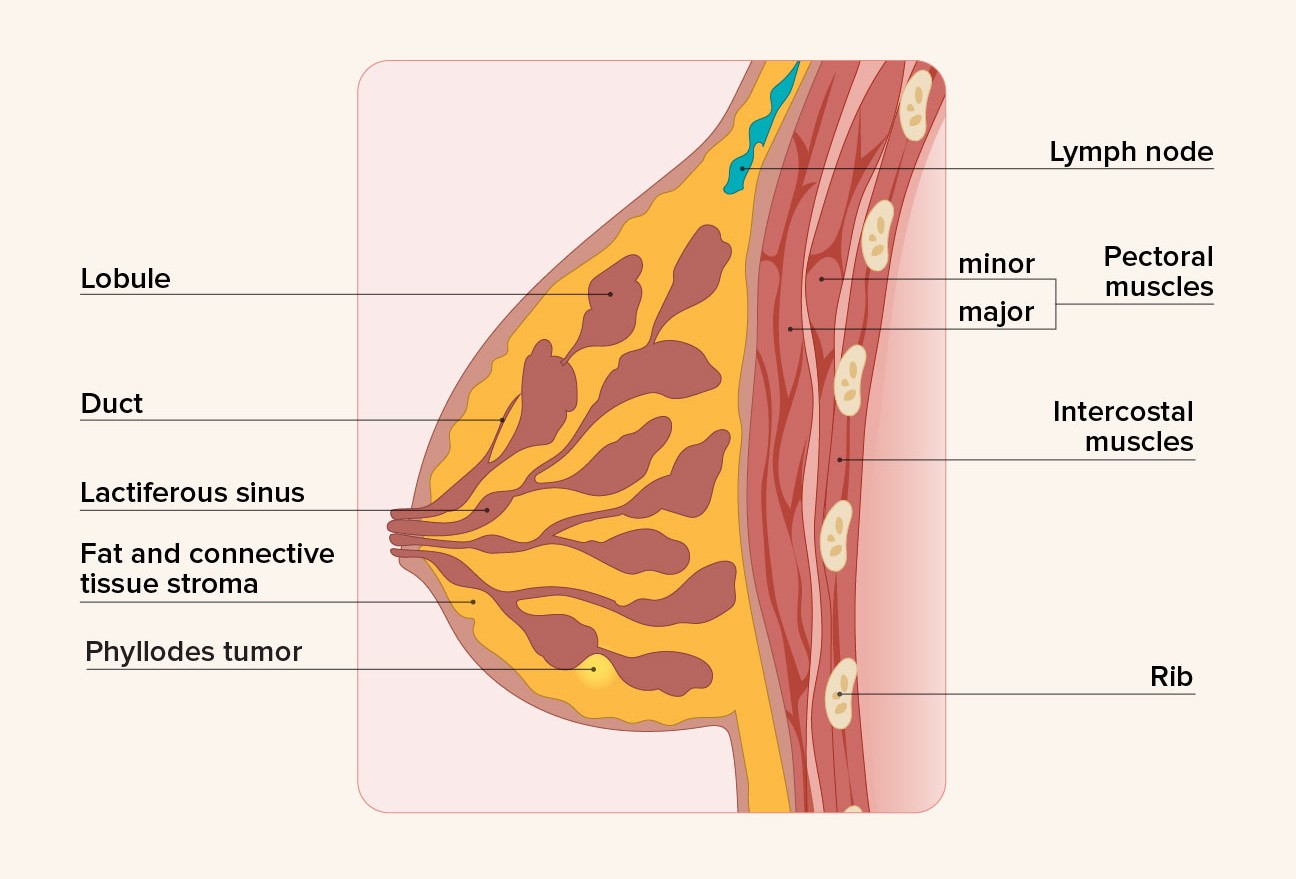
A phyllodes tumor is a particular subset of fibroadenoma that can take on benign, borderline, or malignant characteristics. Over ½ of phyllodes tumors are benign and ¼ are malignant.
Unlike normal breast cancer, a phyllodes tumor begins in the connective tissue instead of the ducts/glands. Since this is typical of a fibroadenoma, it can be hard to distinguish the two types of tumors from an ultrasound, mammogram, or even biopsy.
(Watson, 2021)
Generally, this form of tumor appears in women around the age of 40. Women with Li-Fraumeni syndrome are more prone to this type of tumor.
When treating a benign phyllodes tumor, most patients opt for an excisional biopsy. With borderline or malignant tumors, most patients undergo a lumpectomy or partial mastectomy. When a good margin cannot be obtained with this procedure, a mastectomy is chosen for treatment. Patients can also pursue radiation after surgery if margins are not good.
A malignant phyllodes tumor is unlike regular breast cancers. They are treated more like sarcomas as they respond differently to common breast cancer treatments (Phyllodes Tumors of the Breast | American Cancer Society, 2014).
My Experience
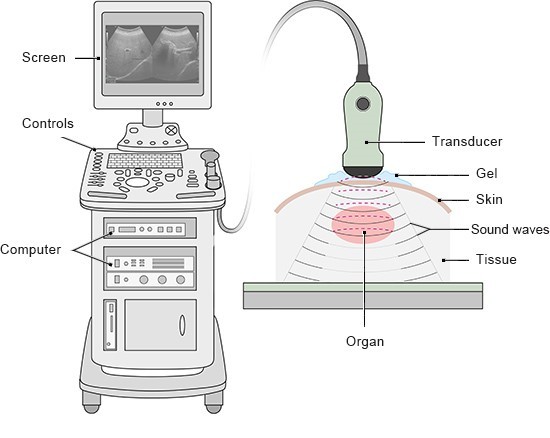
Around 2020, I visited my pediatrician for a regularly scheduled check-up, and during this examination, we found a hard lump in my right breast. Shortly after, I consulted with an oncologist who helped me schedule an ultrasound.
(How Do Ultrasound Examinations Work? | Informedhealth.org, 2015)
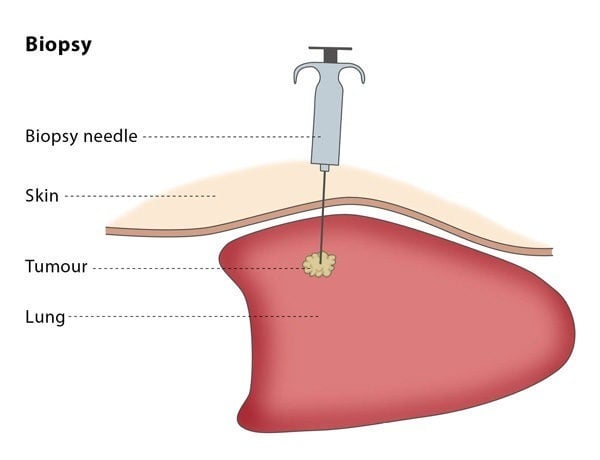
Through this ultrasound, we confirmed the presence of a tumor, and I proceeded by getting a biopsy.
(Biopsy, 2018)
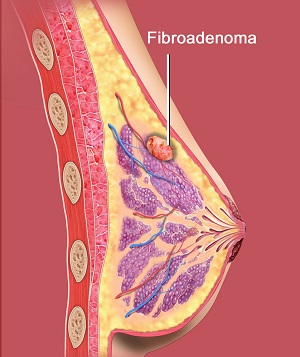
Luckily, the biopsy results were extremely good, and the abnormal lump turned out to be a fibroadenoma. It was the furthest thing I could get from breast cancer and relatively painless.
(Prof. Malcolm Kell, 2022)
For the next year, I got regular ultrasounds to track the growth of the tumor, which stayed relatively the same. Though at one of these visits, my doctor found another lump located deeper within my breast. We began to track this lump as well. As a few more months passed by, this second lump began to grow pretty quickly. My family and I consulted with a surgical oncologist (Dr. Sarma), and she recommended that we continue to follow the growth of the two lumps and only remove one if it became painful or grew larger than 3 centimeters. Since the second lump was only about 1.5 centimeters in width and length, I was not worried.
Near the end of the year, I went to get another ultrasound, and my doctors and I discovered that the second tumor had grown to become over 3 centimeters long and around 2 centimeters wide. I was assured that this secondary tumor was another fibroadenoma and that there was nothing to worry about. Eventually, I decided to pursue an excisional biopsy for peace of mind (and since my college’s winter break was approaching).
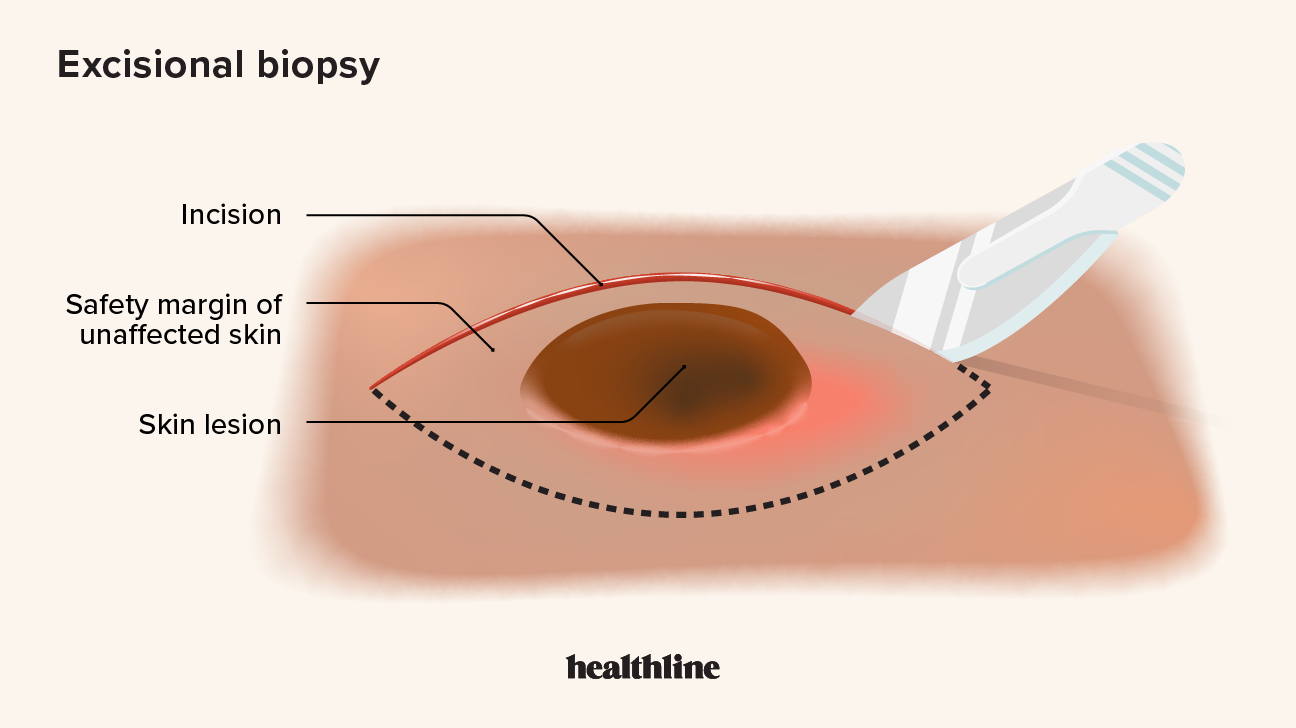
(Behring, 2022)
Over Christmas, I went in to get the tumor surgically removed, and over New Years, I recovered from the surgery. I went back to school excited to start fresh, free from doctor’s appointments and ultrasounds.
~~~
Unfortunately, a few weeks into the spring semester, I got a call from my dad (Dr. Chai). He explained that the pathologist's results for the removed tumor were different than we expected. The tumor was a borderline phyllodes tumor. Because of this information, he pushed me to come back home to get a second surgery with better margins (more outside breast tissue needed to be removed).
Throughout this whole process, I was extremely afraid. I trusted my doctors, which included my dad (Dr. Chai), and I knew almost any breast cancer was not fatal. Even still, I had never been faced with a major health issue as a 17-18-19-year-old girl. Also, I was too embarrassed to explain the issue to my friends in college since I had met them only a few months prior. When people were constantly stressed about a midterm or excited about a basketball game, it never seemed like the right time to share a personal health issue.
Instead of consulting with my friends, I consulted with Google. I had no idea what form of treatment I wanted to pursue. On one hand, I wanted to trust my dad and my doctors. On the other hand, I was growing incredibly concerned with the long-term effects of a lumpectomy. I was warned that I may have to pursue reconstructive breast surgery after, which crushed my world as a relatively insecure teenage girl. Dr. Sarma also informed me that the second surgery would potentially affect the functioning of my ducts/glands if I ever wanted to have a child.
Ultimately, I decided to pursue a lumpectomy. In my mind, it was not worth the risk of the tumor growing back if the mutation had possibly spread to nearby breast tissue. I left school once again and had a successful surgery back home.
In the aftermath of this experience, I was more stressed than before. I became extremely paranoid that the tumor would come back and insisted on getting an additional ultrasound over the summer. My academics were also greatly affected this semester as I was either missing weeks of classes or on high doses of pain medications. Looking back, I wish I had leaned more on my friends for support during this time when my family was so far away. As I am continuing to reflect now, I am extremely grateful for the experience and the results of my treatments. I acknowledge that the path I went down was lucky compared to other patients I had seen my dad caring for in the past.
Nonetheless, this experience still changed the course of my life. Physically, I have fully healed and only get one ultrasound per year now. Mentally, I think I have a lot to process and not a lot of people to process with (since most women with phyllodes tumors are quite old). After taking this class, I decided to reach out to my physician to get tested for various genetic disorders like Li-Fraumeni syndrome.
~~~